


A practical, low-fuss way to organize your pantry so it’s easier to find food, keep track of what you have, and reset quickly after busy weeks.
If you want a pantry that stays organized, focus on three things: clear zones (so items always have a “home”), simple containers (so messy packaging doesn’t take over), and an easy reset routine you’ll actually do. Start by grouping food by how you use it—breakfast, snacks, dinner, baking—then store the everyday items at eye level. Whether you have a full kitchen pantry or a small pantry cabinet, the goal is the same: make it faster to put groceries away than to leave them on the counter.
Who this pantry setup works best for
- Busy households: If multiple people grab snacks and ingredients, zones and labeled bins reduce “Where does this go?” clutter.
- Small-space kitchens: A pantry cabinet can feel tight fast—containers and categories keep it usable instead of jammed.
- Anyone trying to cut food waste: A simple “use first” spot makes it easier to see what needs to be eaten soon.
- People who hate complicated systems: This approach keeps the rules minimal so the pantry doesn’t fall apart the first hectic week.

Who it may not be ideal for (without tweaks)
- Bulk-only shoppers: If you store lots of large bags and big containers, you may need sturdier shelving, deeper bins, or more floor-level storage than a basic pantry cabinet can handle.
- Households with highly specific diets or allergy separation needs: You can still use zones, but you’ll want clearer separation and more labeling than the average setup.
Pantry basics that make the biggest difference
You don’t need a full makeover. A few intentional choices usually do more than buying lots of random bins.
1) Start with zones you’ll remember
Pick 4–6 zones based on your real life, not a “perfect pantry” photo. Common zones that work in most homes:
- Breakfast (oatmeal, cereal, spreads)
- Snacks (grab-and-go items, lunchbox staples)
- Dinner basics (pasta, rice, canned beans, sauces)
- Baking (flour, sugar, chocolate chips, sprinkles)
- Drinks (tea, coffee, drink mixes)
- Backstock (extras, duplicates)
Tip: Keep “backstock” separate. Mixing extras into everyday shelves is one of the fastest ways a pantry turns into a pile.
2) Use containers for the mess-makers (not everything)
Target the items that cause the most visual clutter: snack bags, pouches, small packets, and odd-shaped boxes. A few go-to options:
- Handled bins for snacks and packets (easy to pull out and see everything)
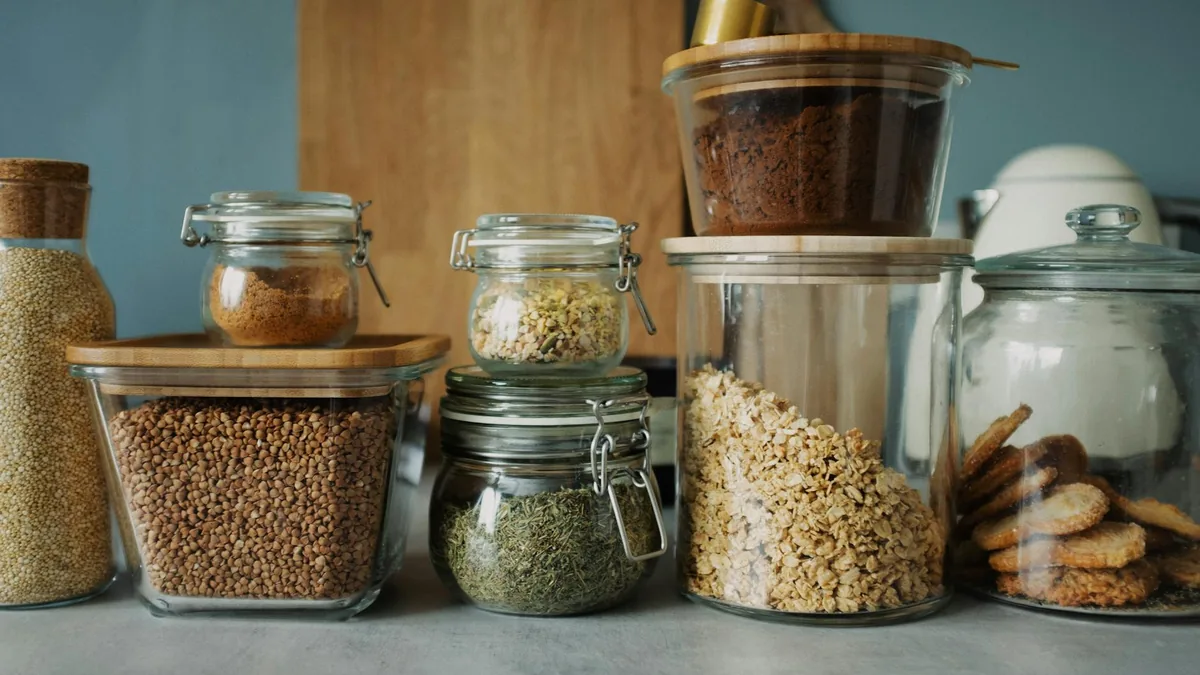
- Clear, stackable containers for cereal, flour, sugar, and rice (less spilling, less half-open packaging)
- Lazy Susans for sauces, nut butters, and small jars (so nothing disappears in the back)
If your kitchen pantry has deep shelves, bins prevent the “lost behind the chips” problem. If you’re working with a pantry cabinet, stackable containers help you use vertical space without toppling.
3) Set up a simple “Use First” spot
Choose one small bin or one shelf section for items that are open, close to expiring, or just need to be used soon. This is a small change that can make meal planning easier—and helps prevent the pantry from collecting mystery half-used boxes.
4) Make restocking idiot-proof (even for tired you)
The most sustainable pantry systems reduce decision-making. Two easy ways:
- Label by category, not brand. “Snacks” lasts longer than “Granola Bars.”
- Keep like items together even if they’re not decanted. It’s okay to leave boxes as-is if the zone is clear.
5) Don’t skip the “landing zone”
If groceries typically sit on the counter because the pantry feels overwhelming, create a small landing zone inside the pantry: one empty bin or one open shelf. You can drop items there fast, then sort into zones when you have a minute.

A quick decision framework: kitchen pantry vs. pantry cabinet storage
If you’re deciding how to organize your space, use this simple checklist to choose the right approach for your shelves.
If you have a kitchen pantry (deeper shelves)
- Prioritize pull-out access: Bins and turntables help you reach the back without unloading everything.
- Create “front stock” rules: Put everyday items in front; store backstock in a separate bin or on a top shelf.
- Use visibility to your advantage: Clear bins and consistent categories help you spot what you’re low on quickly.
If you have a pantry cabinet (narrower, less depth)
- Prioritize vertical stacking: Stackable containers and shelf risers can add usable space.
- Keep categories tighter: Fewer zones (but clearer) prevents the cabinet from feeling stuffed.
- Avoid “decorative” systems that waste space: Bulky baskets can eat up room quickly in a cabinet.
If your pantry is always chaotic, pick one rule to start
Choose just one: (1) a snack bin, (2) a “use first” bin, or (3) a backstock bin. Any one of those reduces daily mess fast.
Final verdict: the easiest pantry is the one you can reset in 5 minutes
The most functional pantry isn’t the one with the most containers—it’s the one with clear zones, a few bins that solve real problems, and a simple reset habit. If you have a full kitchen pantry, use bins and turntables to make deep shelves easy to access. If you’re working with a pantry cabinet, keep categories tight and lean on stackable storage so you don’t waste space. Either way, a small “use first” spot and a separate backstock area will do more for day-to-day sanity than a total overhaul.
FAQ
How do I keep my pantry from getting messy again?
Make the “put away” step easy: label broad categories, store everyday items at eye level, and keep one bin for backstock so duplicates don’t creep into every shelf.
Should I decant everything into matching containers?
Only if it helps you maintain it. Many pantries do best with a hybrid approach: decant spill-prone staples (flour, sugar, cereal) and keep the rest in original packaging inside labeled bins.
What’s the best way to organize snacks for kids (or roommates)?
Use one or two clearly labeled snack bins at a reachable height. Keep overflow/backstock elsewhere so the main snack area stays easy to browse and doesn’t turn into a heap.
If you’re tackling a pantry reset, bookmark this and do it in two short rounds: first zones, then containers. And if you’re on a whole-house organizing streak, check out our related cleaning and storage guides for easy wins in the kitchen.